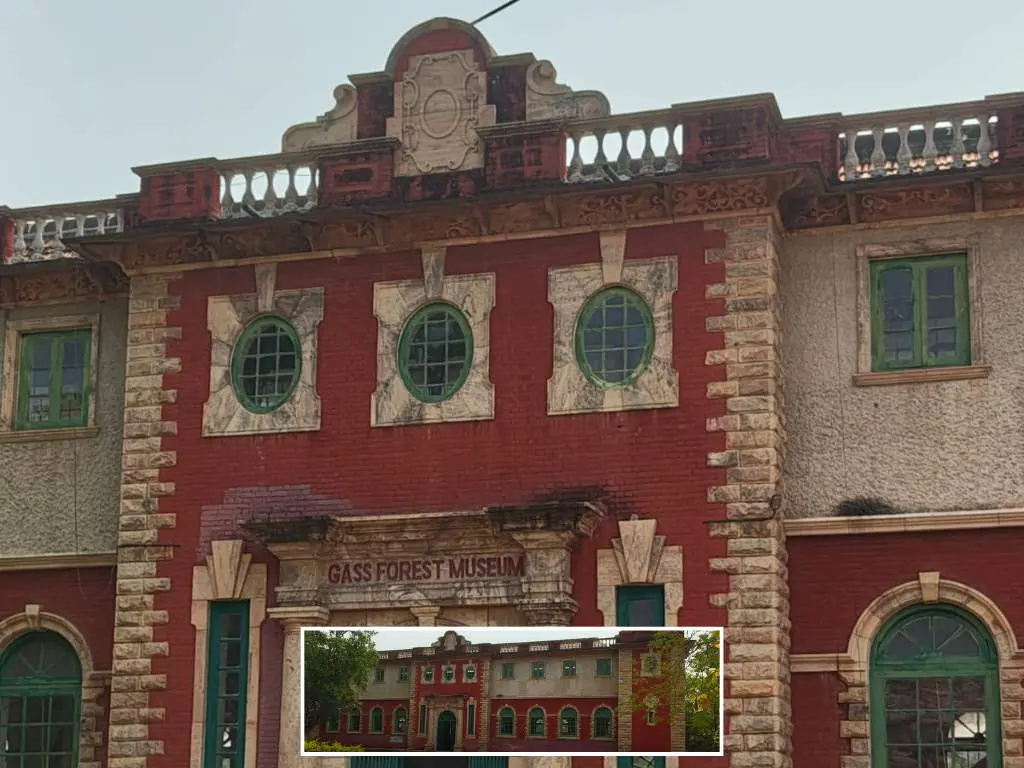
🏛️ A Legacy Rooted in History
The Gass Forest Museum, located in Coimbatore, stands as India’s oldest and most extensive institution dedicated to forestry heritage. Founded by Horace Archibald Gass and inaugurated in 1902, the museum preserves a massive collection ranging from taxidermy and skeletal remains to diverse botanical specimens.
In recognition of his relentless dedication, the government officially named it the Gass Forest Museum in 1905. The current building was inaugurated in 1915, and today it proudly holds the title of India’s largest and oldest forest museum.
Visitors can explore specialized exhibits featuring rare timber cross-sections, historical tribal artifacts, and intricate displays of forest engineering models. The archives also highlight the biological complexity of nature through sections on entomology, mycology, and geology. Ultimately, these records celebrate the historical preservation of natural resources and the scientific evolution of forest management in India.
🐾 Wildlife Section – Where Nature Stands Still at the Gass Forest Museum
Step into the Wildlife Section and it honestly feels like nature hit the pause button just so we could study it better. This area is designed to help visitors understand forest animals, their structure, and their role in biodiversity — in a way that’s simple, visual, and surprisingly fascinating.
🦬 Stuffed Indian Bison (Gifted in 1956)
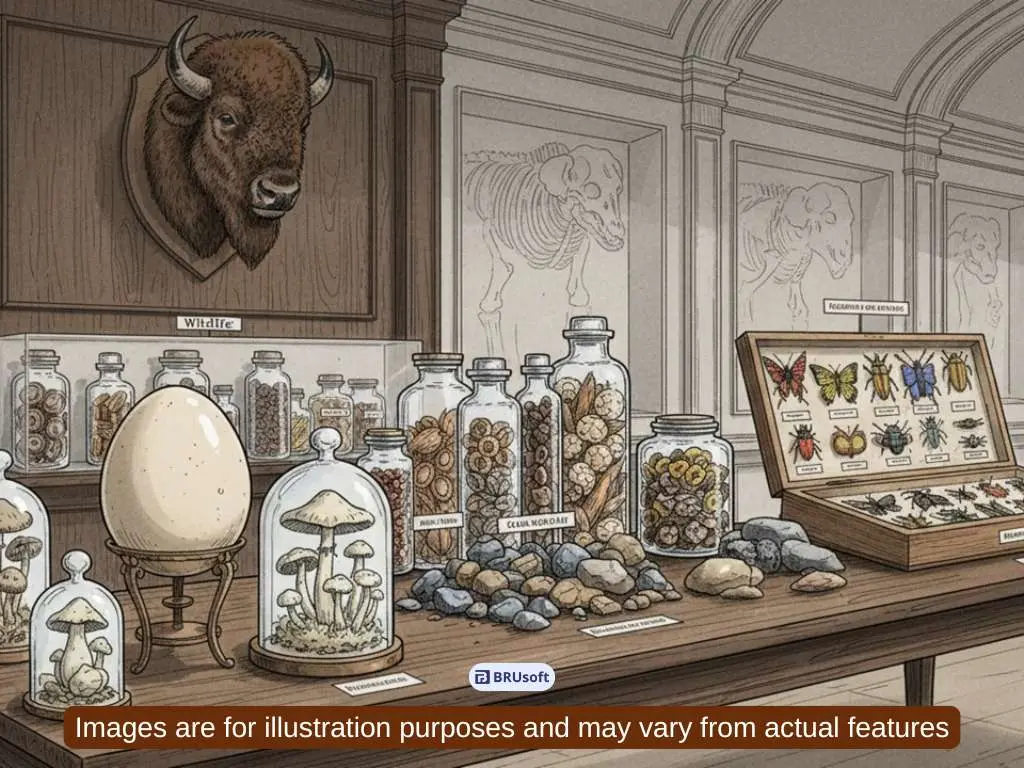
One of the biggest attention-grabbers here is the majestic Indian Bison. This preserved specimen was presented as a special gift in 1956 and showcases the sheer size and strength of one of India’s most powerful wild animals. It gives visitors a close look at features you’d normally only spot from far away in the wild.
🐆 Leopard, Gazelle, Monkeys & Nilgiri Langur Displays
These preserved models help visitors observe physical differences between species — from the leopard’s muscular build to the gentle frame of the gazelle. The monkey and Nilgiri langur exhibits highlight how primates adapt to forest environments and tree-based living.
🦴 Full Skeletons of Elephant and Bull
The skeleton displays are a favorite among students. They clearly show bone structure, size comparison, and how animals are built for movement, strength, and survival. Seeing an elephant’s full skeleton up close is a real eye-opener.
🥚 Rare Bird Eggs Collection
This section includes eggs from multiple bird species, with the ostrich egg — the world’s largest — being a star attraction. It helps visitors understand bird diversity and reproductive patterns.
🦌 Antlers, Skulls & Wildlife Trophies
These exhibits explain how animals defend themselves, adapt, and evolve over time. Antlers and skulls especially reveal fascinating differences between herbivores and carnivores.
🌿 Why This Section Matters
This isn’t just about displays — it’s about awareness. The Wildlife Section makes biodiversity easier to understand, helping visitors appreciate how every species plays a role in maintaining forest balance.
It’s calm, educational, and quietly powerful — the kind of place where curiosity naturally takes over 🌱
🌱 Botany Section – A Forest in Miniature at the Gass Forest Museum
The Botany Section is like shrinking an entire forest into one fascinating room. Instead of just seeing trees from the outside, this section helps visitors understand what makes a tree grow, survive, and support life around it — all explained through simple visual displays.
🌰 Seeds – The Beginning of Forest Life
This area showcases seeds from many forestry species, helping visitors understand how different plants reproduce and spread. You’ll notice how seeds vary in size, shape, and texture depending on the tree they come from. It’s a gentle reminder that even the tallest tree once started as something tiny.
🍎 Fruits – Nature’s Carriers
Fruits displayed here show how plants protect and distribute their seeds. Some fruits attract animals, while others are designed to travel by wind or water. This helps explain how forests naturally expand over time.
🌳 Barks – The Tree’s Shield
Tree bark samples reveal how different species protect themselves from heat, insects, and disease. Each bark type has a unique texture and thickness, offering clues about the tree’s age and environment.
🧵 Fibers – Nature’s Useful Threads
Plant fibers used for ropes, mats, and other daily essentials are also displayed. This section connects forests to human livelihoods, showing how natural materials have supported communities for centuries.
🌿 Roots – The Hidden Strength
Roots play a crucial role in holding soil together and absorbing nutrients. Models and samples help visitors visualize how roots support entire ecosystems beneath the ground.
🎋 Bamboo & Canes – Fast-Growing Wonders
The bamboo and cane exhibits highlight some of the fastest-growing plants on Earth. These species are incredibly useful — from construction to handicrafts — and they play a major role in sustainable living.
🌍 Why This Section Matters
The Botany Section helps visitors see forests not just as trees, but as complex living systems. It’s a simple yet powerful way to understand how plant life supports wildlife, people, and the planet.
Think of it as a quiet classroom where nature does all the teaching 🌿
🌳 Timber Gallery – Giants of the Forest
Walk into the Timber Gallery and it instantly feels like stepping into a quiet hall of forest giants. This section focuses on the science of wood — how trees grow, how timber differs across species, and why certain woods are valued for strength, durability, or fragrance.
🌳 A 456-Year-Old Teak Cross-Section
One of the most fascinating exhibits here is a massive cross-section of teak that’s over four centuries old. The visible growth rings tell a silent story of changing seasons, rainfall patterns, and the tree’s journey through time. It’s a simple way to understand how trees record history within themselves.
🌲 A Massive Sandalwood Tree Display
The gallery also features an impressive sandalwood tree specimen weighing around 1.75 tonnes and standing over 10 meters tall. This display highlights the economic and cultural importance of sandalwood, known for its fragrance and medicinal value.
🪵 Over 600 Timber Specimens
This section houses one of the most diverse timber collections in India. Visitors can compare different wood types side by side — noticing differences in color, texture, density, and grain patterns.
🪚 Logs, Panels & Rare Wood Samples
From cylindrical logs to polished panels, the exhibits demonstrate how raw timber is processed and used. Rare and specialty woods are also displayed, helping visitors understand why certain species are preferred in construction, furniture, or craftsmanship.
🌿 Why This Section is Special
The Timber Gallery makes forestry science easy to grasp. It shows how trees are not just natural resources but also historical records, economic assets, and ecological treasures.
Whether you’re a student, a nature lover, or just someone curious about how wood shapes our daily lives, this gallery turns learning into a quiet, fascinating experience 🌱
🛠️ Forest Engineering Models – How Forest Science Works in Real Life
The Forest Engineering Models section is where the science behind forestry becomes easy to understand. Instead of reading complicated explanations, visitors get to see miniature working models that show how forests are carefully managed and how timber is handled from tree to usable material.
🌉 Miniature Forest Bridges
These scaled-down bridge models demonstrate how engineers design structures strong enough to transport timber across rivers and uneven forest terrain. They help visitors understand how accessibility plays a big role in sustainable forest operations.
🏠 Timber Houses – Built from the Forest
Model houses show how wood from different tree species is used in construction. From beams and pillars to roofing structures, these displays highlight how timber is selected based on strength, flexibility, and durability.
📦 Timber Stacking Techniques
This section explains how logs are arranged after harvesting. Proper stacking is important to prevent damage, allow airflow, and maintain wood quality. The models show how spacing and alignment help in preserving timber.
☀️ Timber Seasoning Methods
Seasoning is the process of drying wood before use. The models illustrate how natural air-drying and controlled methods reduce moisture content, making wood stronger and less likely to crack or warp.
🌱 Why This Section Matters
The Forest Engineering Models make it clear that forestry is not just about cutting trees — it’s about careful planning, scientific handling, and sustainable use of resources. These displays help visitors appreciate the engineering knowledge that supports forest conservation and responsible timber production.
It’s like seeing the “behind-the-scenes” process of how forests responsibly contribute to everyday life 🌿
🦋 Entomology – The Insect Kingdom
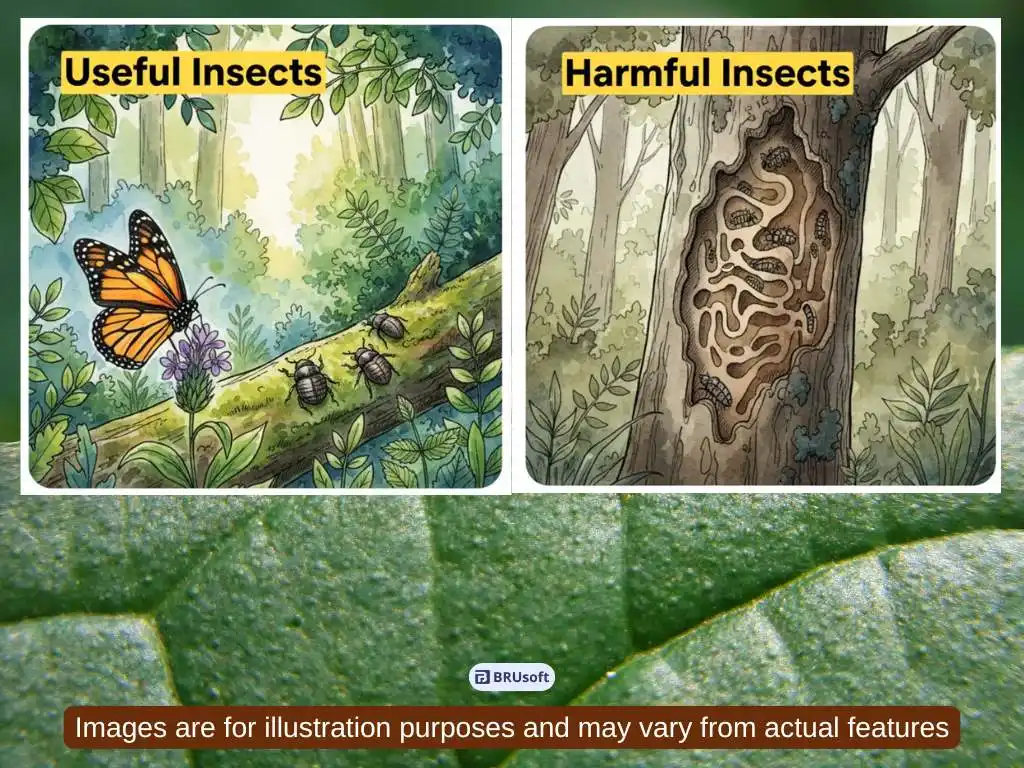
The Entomology Section is where the tiny creatures of the forest take center stage. Even though insects are small, they play a massive role in keeping forests healthy and balanced. This section helps visitors understand how insects influence plant growth, wildlife survival, and overall biodiversity.
🦋 Butterflies – Nature’s Pollinators
The colorful butterfly displays are often the first thing visitors notice. Butterflies help in pollination, which means they assist plants in reproducing. Their presence is also a sign of a healthy ecosystem because they thrive only in clean and balanced environments.
🌙 Moths – Nighttime Contributors
Moths may not always get the spotlight, but they are just as important. Many moth species help with pollination during the night and also serve as a food source for birds and other animals.
🐞 Helpful Insects
Some insects protect forests by feeding on harmful pests or by aiding in decomposition. These insects help recycle nutrients back into the soil, promoting healthier plant growth.
🐛 Harmful Insects
The section also displays insects that can damage trees by feeding on leaves, bark, or roots. Understanding these pests helps forest departments manage outbreaks and protect vegetation.
🌿 Why This Section Matters
The Entomology Section shows that insects are not just background creatures — they are key players in the survival of forests. Every insect, whether helpful or harmful, has a role in maintaining nature’s balance.
It’s a fascinating reminder that even the smallest life forms can have the biggest impact on our environment 🌍
🪨 Geology & Mycology – Earth, Fungi & Forest Life
This section connects two fascinating worlds — the ground beneath the forest and the tiny organisms that help trees grow. It explains how rocks, soil, minerals, and fungi all work together to support healthy forests.
🪨 Geology – The Foundation of Forests
The geology displays feature rocks, minerals, and soil samples collected from different regions. These exhibits help visitors understand how the type of soil and minerals in the ground affects plant growth.
Different trees thrive in different soil conditions. Some need nutrient-rich soil, while others grow better in rocky terrain. By studying geology, forest experts can predict which species will grow best in certain areas.
You’ll also find interesting mineral collections, including different forms of mica, showing how natural elements influence the environment over time.
🍄 Mycology – The Role of Fungi in Forests
The mycology section focuses on fungi — organisms that play a surprisingly big role in forest ecosystems. Some fungi help break down dead plants and trees, turning them into nutrients that enrich the soil.
Other fungi form partnerships with tree roots, helping them absorb water and minerals more efficiently. While some fungi can harm plants, many are essential for forest health and regeneration.
🌱 Why This Section Matters
This part of the museum shows that forests don’t just grow from sunlight and water — they depend on what happens underground too. Rocks shape the soil, minerals feed plants, and fungi recycle nutrients, creating a balanced ecosystem.
It’s a quiet reminder that even what we don’t see plays a huge role in keeping forests alive 🌍
🧺 Non-Timber Forest Products – Forest Value Beyond Wood
This section is a gentle eye-opener because it shows that forests are not just about timber. In fact, many everyday products we use come from forests without cutting down trees. These are called Non-Timber Forest Products (NTFPs), and they play a big role in supporting livelihoods, traditional medicine, and local economies.
🌳 Gums & Resins – Nature’s Protective Fluids
Gums and resins are natural substances released by trees, often used in medicines, adhesives, varnishes, and even food products. The displays here show how these materials are collected sustainably, allowing trees to continue growing while still providing value.
🌿 Oils – Extracted Goodness
Essential oils derived from forest plants are widely used in healthcare, cosmetics, and aromatherapy. These exhibits explain how plant parts like leaves, bark, and seeds are processed to produce oils that benefit both industries and households.
🎨 Natural Dyes & Tans
Before chemical colors became common, forests were the original paint palette. This section highlights how natural dyes are extracted from bark, roots, and leaves. These eco-friendly dyes are still valued in textiles and traditional crafts.
🛞 Rubber – A Flexible Forest Gift
Rubber, obtained from certain tree species, is another important non-timber product. The display explains how tapping rubber trees allows for repeated harvesting without harming the plant.
💊 Medicinal Extracts – Forests as Natural Pharmacies
Many plants found in forests have healing properties. The museum showcases extracts used in traditional and modern medicine, reminding visitors that forests have long supported human health.
🌍 Why This Section Matters
This part of the museum helps visitors understand that forests contribute far beyond construction materials. They support industries, healthcare, culture, and sustainable livelihoods — all while preserving the ecosystem.
It’s a simple yet powerful reminder: sometimes the greatest value of a forest comes from what we take without cutting it down 🌱
🏹 Ethnology – Culture of Forest Tribes
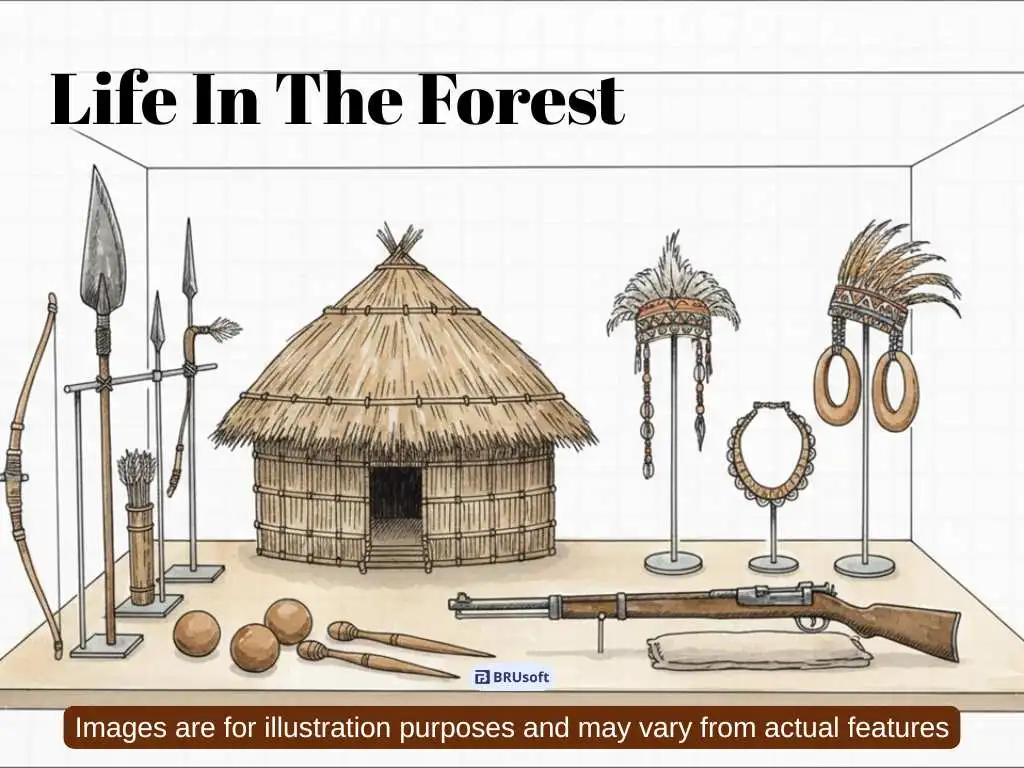
The Ethnology Section is where the human story of forests comes alive. Instead of focusing only on trees and wildlife, this area highlights how forest communities have lived, adapted, and thrived in close connection with nature for generations.
🧿 Tribal Ornaments – Identity & Tradition
The display of tribal ornaments showcases jewelry and accessories made from natural materials like beads, bones, metals, and plant fibers. These ornaments are not just decorative — they often represent cultural identity, social status, and traditional beliefs.
🛖 Models of Tribal Huts – Living with Nature
Miniature models of tribal huts give visitors a glimpse into how forest communities designed homes using locally available materials. These structures were built to suit the environment, offering protection from weather while maintaining harmony with nature.
🏹 Hunting Weapons – Tools for Survival
Traditional hunting tools such as spears and handcrafted weapons are displayed to explain how tribes once depended on forests for food and survival. These tools also reflect the deep understanding tribal communities had of animal behavior and forest landscapes.
🔫 Historical Forest Department Armaments
This section also includes older weapons used by forest officials in earlier times, such as rifles and bayonets. These exhibits help visitors understand how forest protection practices have evolved over the years.
🌿 Why This Section Matters
The Ethnology Section reminds us that forests are not just natural spaces — they are cultural landscapes shaped by people who lived responsibly within them. It highlights the knowledge, traditions, and lifestyles that contributed to sustainable forest living long before modern conservation methods existed.
It’s a thoughtful space that shows how deeply human life and forests have always been connected 🌱
🪵 Wood Crafts – Creativity from Nature
The Wood Crafts section is where the practical side of forests meets human creativity. This area highlights how raw forest resources are transformed into useful and artistic items that play a role in everyday life.
🧵 Bobbins & Shuttles – Supporting the Textile Industry
Wooden bobbins and shuttles on display show how forest materials have supported industries like weaving and textile production. These simple tools were once essential in spinning and loom operations, especially in regions known for textile craftsmanship.
🎨 Carving Items – Art from Wood
The carving displays showcase the artistic possibilities of wood. From decorative pieces to utility items, these exhibits reveal the skill and patience required to shape wood into beautiful forms.
🎳 Skittle Balls & Handcrafted Items
Wood has long been used to create toys, sports items, and daily-use objects. Skittle balls and handcrafted goods in this section demonstrate the versatility of timber beyond construction and furniture.
🪵 Forest Resources in Everyday Life
The collection also includes small utility items made from various wood types, explaining how different species are chosen based on strength, weight, and durability.
🌿 Why This Section Matters
The Wood Crafts section shows that forests contribute not only to industry but also to culture and creativity. It highlights how sustainable use of forest resources can support livelihoods while preserving traditional craftsmanship.
It’s a reminder that behind every wooden object lies a journey from forest to finished form — shaped by both nature and human skill 🌱
🌏 Managed by
The museum is associated with
ICFRE – Institute of Forest Genetics and Tree Breeding
under the Indian Council of Forestry Research and Education.
🌿 Why You Should Visit
✔️ Perfect for students & researchers
✔️ Ideal family educational trip
✔️ Rare collections you won’t find elsewhere
✔️ Calm, green, and deeply informative
If Coimbatore had a storyteller carved out of wood and leaves, this museum would be it.
Leave a Reply